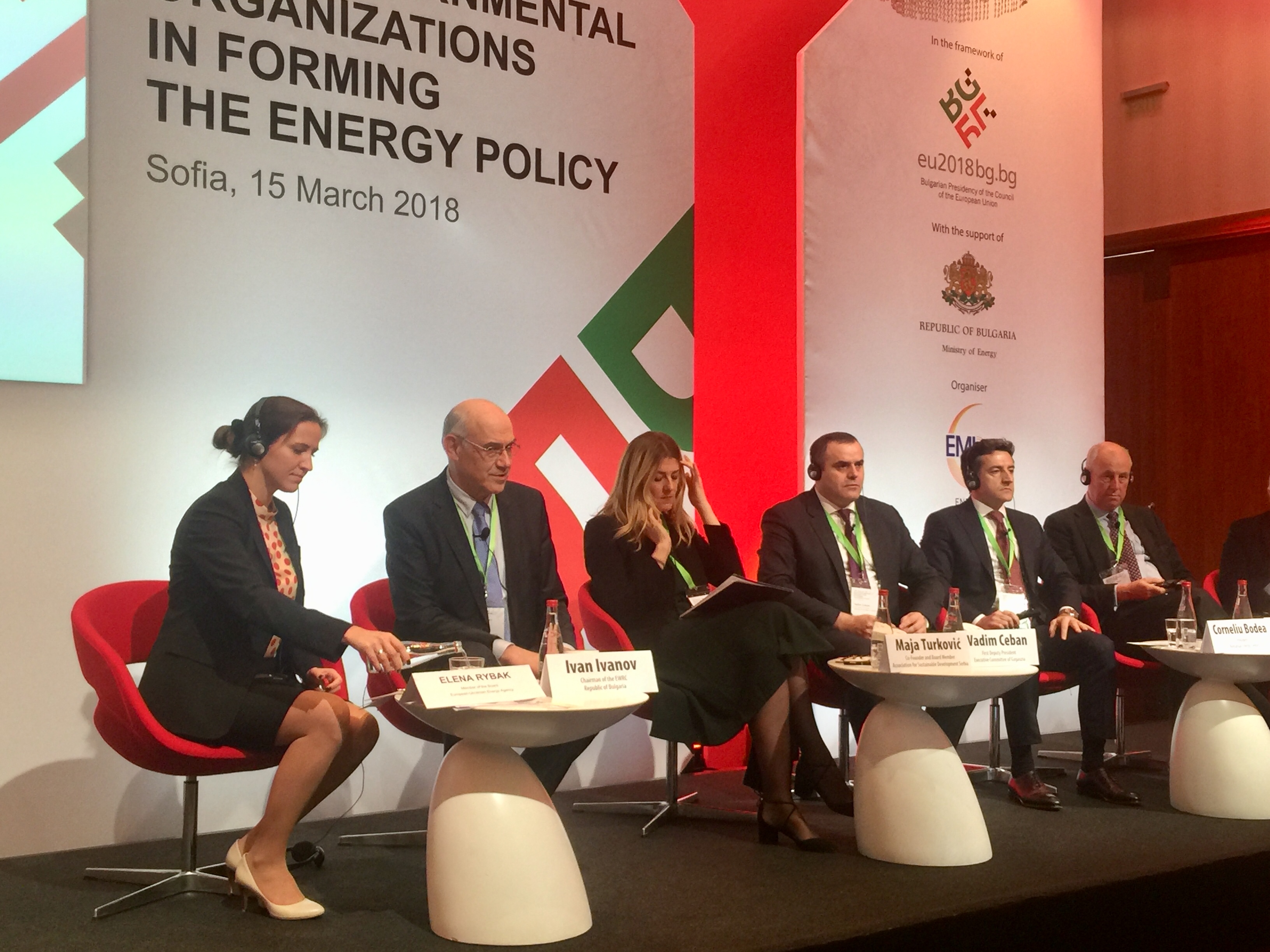
„Interaction of the Energy and Water Regulatory Commission with NGOs is essential for the adoption of regulatory decisions that benefit the whole society. The role of this cooperation stems from both the EU's understanding of the public consensus need on the integrated national plans creation in the energy and climate sector and the proven benefit of such a practice to form balanced solutions in the interest of all participants.“ This was stated by EWRC Chairman Assoc. Prof. Ivan Ivanov in "The role of non-governmental organizations in forming the energy policy" discussion, which is part of the Bulgarian Presidency of the EU Council program.
EWRC doesn’t set the energy sector development guidelines, but its activity is important in terms of the regulatory policy, emphasized Assoc. Prof. Ivanov. Taking this into account, the law defines the regulator's commitments to public debate and to take into account the non-governmental sector opinions in the course of the decision-making procedure. EWRC organizes open sessions and public discussions on the adoption of socially significant decisions /about the electricity and natural gas prices; when discussing the general administrative acts /general terms and conditions in the contracts between consumers and licensed companies; as well as when approving bylaws/regulations, methodologies, rules, etc. All non-governmental sector opinions expressed during the discussions or subsequently submitted in writing within the deadlines are taken into account by the Commission, and the regulator issues a reasoned opinion on each of them. "The regulator fully follows the principles of the Fourth Energy Package ("Clean Energy for All Europeans"), in which the main focus is on consumer interests," said Assoc. Prof Ivan Ivanov. He added that, in pursuance of the publicity and transparency policy, the Commission publishes in advance on its website all projects under discussion and broadcasts its sessions online, enabling users across the country to follow up its work and to send comments on the issues they are interested in. At the institutional level EWRC closely interacts with the Commission for consumer protection, joint expert groups have been set up on specific topics, in order to take the utmost account of the interests of the complainants.
"Interaction with non-governmental organizations will continue to have significant importance in the EWRC work. For us, they are an important partner in the discussion of key regulatory policy decisions and cooperation with them can only contribute to achieving good results, "concluded EWRC Chairman Assoc. Prof. Ivan Ivanov.
